The Return of the Humpbacks! 11_30_2014

It was another full house for the Sunday 3-tanker this morning on the Sea Fox. With personal gear slung over shoulder, 15 hardcore avid divers waltz through the door and straight onto the boat. With clear skies, moderate winds, and a small swell, the boat ride towards Kewalo Basin was picturesque. Prior to arriving at the first dive site, The Sea Tiger, a pod of 5 humpback whales were spotted. I can’t wait for the first chance to go scuba diving with humpback whales this year, a rare treat that happens usually a dozen times a season.

OLYMPUS DIGITAL CAMERA

*The Sea Tiger*
100ft – 30min
77 degrees

While descending on the Sea Tiger, the divers were met with absolutely no current and 60 foot visibility. Captain Joe was right on the money. Hovering over the side of the deck and looking down, the divers spotted a 5-foot white tip reef shark lurking along the bottom. A pufferfish, schools of snapper, and a giant green moray also were spotted on this scuba dive.

OLYMPUS DIGITAL CAMERA OLYMPUS DIGITAL CAMERA

*YO-257 & San Pedro*
99ft – 31min
77 degrees

En-route to the YO-257 the pod of humpback whales was spotted again, this time further out to sea off Waikiki. Too bad they didn’t stick around on site. With the current beginning to pick up and 50 foot visibility, the encounter would had to have been a close one. Diving in high off the second whale siting, YO-257 and San Pedro didn’t fail to disappoint. Bigger schools of snapper and fusiliers surrounded the wheelhouse of the YO and free swimming eels darted across the sandy bottom. At the San Pedro, an old turtle with battle scars (an apparent shark bite to the shell) cruised a long the wreck while another white tip was spotted napping in the bow.

OLYMPUS DIGITAL CAMERA DSC00971

*Angler’s Reef*
46ft – 44min *drift*
77 degrees

With the winds picking up and the current beginning to blow, the divers opted to continue on with the day’s theme of chilled out diving and go for a drift dive on Angler’s Reef. The whales had come and gone, but there were still plenty of things to see with the 80 foot visibility. A beautiful school of Moorish Idols swam through the group while an octopus and sponge crab hid from prying eyes and flash strobes. Instead of giant green morays, many snowflake eels of all sizes peeked their heads out as the divers eased down the current.

20141130_143529

Congratulations to Serena on completing her Advanced Open Water Diver course! Look us up when you’re read to move on to Rescue Diver.

Thank you Captain Joe, Max, & Dave for crewing and making today possible.

Swimming in the Surge with Team Switzerland 9`16`2014

OLYMPUS DIGITAL CAMERA

This afternoon on the Sea Fox we were joined by Team Switzerland: Tanja, Bettina, & Salome. All of which were students completing their first and second dives of the PADI Open Water Course.

Showing up early, they drew their gear and assembled their SCUBA equipment under the watchful eye of their instructor. The trades were light and the surface conditions were ideal, despite the large southern swell.

Dive 1 was at Angler’s Reef. Having mastered the skills in the pool, they demonstrated their proficiency to their instructor. Weight system/SCUBA unit remove and replace, tired diver tow, and cramp release were all completed on the surface whilst half-mask flood and regulator recover and clear were completed on the bottom. The southern swell brought visibility down to 20ft, at best, but didn’t hinder the student divers from maintaining perfect trim and outstanding neutral buoyancy. A huge turtle, trumpet fish, Long nosed butterfly fish, and a school of porcupine fish made guest appearances for the students. Much to the delight of their instructor, Team Switzerland was able to pull off a 45 minute with a 3-minute safety stop to boot.

Koko Craters was the site for Dive 2 and the surge was more noticeable this time, but that didn’t deter Team Switzerland. Controlled Emergency Swimming Ascent, full-mask flood & clear, and alternate air source stationary were completed with Swiss Army Knife precision. While diving they noticed other aquatic animals getting pushed by the force of the surge. A turtle, giant moray eel, and a huge school of trigger fish couldn’t match the trim and control of the students. With coolness and control, the students glided effortlessly through the water. The alternate air source ascent was completed at the end of the dive with ease.

Not bad for a day in the classroom, right? Bettina and Tanja, we’ll see you tomorrow. Salome, we’ll be seeing you again Thursday!!!

OLYMPUS DIGITAL CAMERA

Much love to the crew! Captain Kellan, Ashley, Carlos, and Bryan.

Dive Stats:

Angler’s Reef & Koko Crater
39ft – 45 minutes & 38ft – 43 minutes


Half-way done! 8/20/2014

20140820_154929

Today on the Sea Fox, among other fun divers from around the Stats, we were joined by Nick. Nick completed his first two open water dives of his Open Water course and breezed through his required skills with ease and deft precision.

Moving along onto the underwater exploration of the dive, Nick’s buoyancy control was on par with the other seasoned divers on the boat. His father being one of them.

IMG_1942

Koko Craters and Angler’s Reef yielded 100ft & 70ft visibility, respectively, and was host to a numerous amount of under water critters. Spotted Porcupine fish, snowflake eel, giant green moray, dragon moray, trigger fish, green sea turtles, and a rather large octopus.

DSC04937

Good skill tomorrow, Nick! Keep on diving!!!

Dive Stats:
Koko Crater & Angler’s Reef
41ft – 50min & 46ft – 55min

Big shout out to Captain Joe, Kellan, Max, Sam *the dive dog*, and Brent!!!

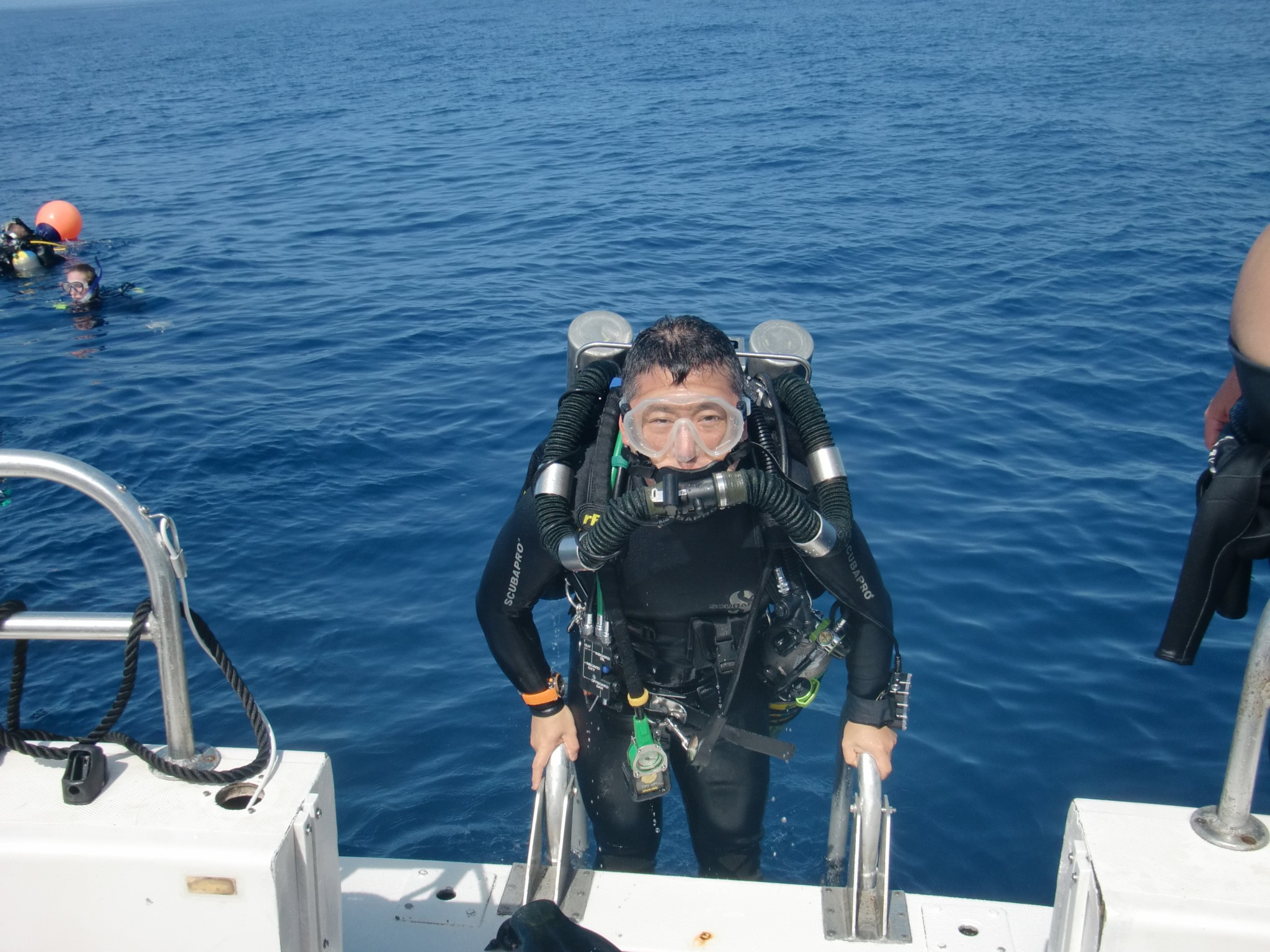
Who wants to be an ASTRONAUT? rEvo ‘TRY DIVES’ now available at IDH

Dive the rEvo III hCCR… the most advanced diving system on the planet!


The rEvo hCCR(hybrid closed circuit rebreather) is the most advanced cutting edge, diving system available for underwater exploration. It rivals the astronaut’s primary life support system and shares much of the same technology. The rEvo hCCR recirculates and conditions the onboard gas supply, extending dive times far beyond those of traditional scuba divers. In addition, there are no bubbles and noise associated with open circuit scuba.

Learn how  rebreathers work and how rEvo divers can remain underwater longer. Discover how they enable divers to closely approach marine life to interact, to take photographs and video, stay warmer and make observations that would otherwise be missed by divers on open circuit scuba. Once you’ve gone Silent, you’ll hear what you’ve been missing!


CCR Try Dives at IDH

There are a few options available for divers wishing to ‘try before they buy’ and we always encourage you to get all the information possible before making a commitment to buy a CCR.

As a diver you have the following options available but if you feel your needs are not met below then please drop us an email detailing your specific request as we tailor events to suit your needs.

Option 1 is an informal 1-2 hour conversation. There is no charge for this but it must be pre-booked and arranged so please don’t show up expecting someone to be available. Drop us an email with the timescale that suits you best and we will advise you when it is best to arrive.

Option 2 is a more detailed version of the above costing $150.00+tax for half a day. With Option 2 we spend more time going into details of the available units plus fire them up and you get to ‘try dive’ them in our pool.

Option 3 is the same as option 2 but with an afternoon out on one of our boats. Please note that with option 3 we do charge an additional boat fee of $60.00 for a total cost of $210.00 per person+tax.

We would like to point out that our rEvo Try Dive days are very different than what is currently available on island. If you’re looking for a quick 20 minute dive on a CCR then there are other instructors offering this option. We consider ourselves a little more organised and professional which is why we meet and greet you in our shop before moving on to the in-water portions of the experience. All fees are included in the prices quoted above and there are no hidden extras involved. We make the theory part of the day informative and enjoyable with plenty of time to play with the units and ask questions.

What are you waiting for? Come on down to IDH and play with our units.

Patrick Lavin Pre BreathPatrick Lavin rEvo 'TRY DIVE'rEvo on the reef

Returning from the deep

Returning from the deep

Returning from the deep

Perfect Conditions for a nice long rEvo CCR dive.

Perfect Conditions for a nice long rEvo CCR dive.

Good to go on his rEvo

Good to go on his rEvo

rEvo REBREATHERS
The rEvo rebreather is the brainchild of Paul Raymaekers, and is available in a number of configurations, which include different models, different electronics packages, and different case materials. Here we will try to make the explanation of the units as clear as possible.

rEvo I, rEvo II and rEvo III

The rEvo I was the original prototype units that were made to ‘work the kinks out’ when the rEvo was still in development. The rEvo II was the first production unit, and has also since been discontinued. While the II is no longer available, hundreds of them are out in the market being active dove, and many appear for sale in the secondhand market.

The rEvo III was designed and released to meet CE specifications, and today the only units for sale new, are rEvo III. The rEvo III is available in several different versions, in which the main differences are size and weight.

CO2 Scrubbing

All rEvo rebreathers come standard with back mounted counter-lungs, and dual 3 pound scrubber cassettes. These scrubbers are used in series, and increase the safety margin, reducing the risk of channeling and bypass.

As an option the RMS system allows for monitoring of your scrubber capacity, and provides a real-time estimate of how much time you have remaining.

For ultra-long dives, an optional radial scrubber system brings the absorbent capacity up to 8.8 lbs of absorbent.

PO2 Monitoring

The rEvodream is the standard PO2 monitoring device and head’s up display which comes on every rEvo unit. It can monitor your choice of one or 2 oxygen cells.

PO2 is displayed on a digital display which mounts to the submersible pressure gauge. The revodream will also display a range of PO2’s using a simple 3-LED display which clips to the DSV of the rEvo, always in view of the diver’s peripheral vision.

The rEvodream has no switches, and is operated by using a series of taps which actuates an internal accelerometer. Powered by standard CR2450 coin batteries, this simple design makes the rEvodream a very robust and reliable solution.

Each rEvo is sold with 2 PO2 monitoring devices, which includes 1 rEvodream PO2 monitor and HUD, and your choice of the following:
rEvodream PO2 monitor and HUD
Shearwater Predator trimix computer and PO2 monitor (hardwired)
Shearwater Predator trimix computer and PO2 monitor (Fischer cable version)
Shearwater Predator trimix computer and setpoint controller (hardwired)
Shearwater Predator trimix computer with RMS setpoint controller (hardwired Digital CAN bus)

Manual Gas Addition

Manual gas addition can be done in one of 2 ways, either through manual addition buttons found on the bottom of the rEvo case, or through a 3-gas addition block.

The 3-gas addition block hangs over the diver’s chest, and allows for ambidextrous addition of either diluent, oxygen or an offboard gas to be plumbed in through the lower quick-disconnect. The 3-gas block comes standard with the rEvo III Micro FT, and is an option on the rEvo III Mini and Standard models.

The case mounted manual addition buttons are found on the bottom of the rEvo III Mini and Standard models. These can be removed as an option. The rEvo III Micro FT does not have these buttons on it, and they cannot be installed as an option.

Automatic Oxygen Addition

Gas can be automatically added to the loop by either a constant flow orifice, and absolute pressure oxygen 1st stage. As the diver increases in depth, the absolute pressure regulator reduces the flow.

In addition, an optional solenoid via a Shearwater Predator controller may be added, providing automatic setpoint control in addition to the constant flow. Utilizing both a solenoid and constant flow creates a ‘hybrid’

On hybrid models, the constant flow orifice can be plugged, and the absolute pressure regulator may be replaced with a standard compensating regulator to allow for true eCCR operation.

Please contact us to setup  your pool demonstration today.

Hawaii SCUBA University Technical Diving Program – Closed Circuit Rebreather Training in Oahu Hawaii

Hawaii SCUBA University Technical Diving Program

(Closed Circuit Rebreather Training)

rEvo CCR's out in FORCEAloha and welcome to the Hawaii SCUBA University(HSU) Technical Diving Program. This post is designed to give you a basic understanding of what and how a Closed Circuit Rebreather (CCR) works.

All CCR units have two main jobs. They recycle the breathing gas by effectively removing Co2 (Carbon Dioxide) out of the Breathing Loop, and replace the metabolized oxygen needed to sustain life.

The Co2 absorbent is one of the key ingredients that allow Rebreathers to work. Without Co2 absorbent (Sofnolime, Sodasorb, Extend Air) the Co2 that is produced as a waste product would be recirculated and re-consumed, creating toxic levels of CO2. The proper rotation of absorbent as well as staying inside manufacturer limits for absorbent duration is paramount to survival.

There are 3 different types of Closed Circuit Rebreathers on the market in regards to how the oxygen is injected and controlled in the Rebreather.

Electronically controlled CCR’s have electronics built into the unit that measure the oxygen content in the breathing loop via oxygen sensors and will inject oxygen via a solenoid valve into the loop based on setpoint values programed into the controller.

Manually controlled CCR’s have some electronics located in the Po2 readout located either in the handset or within the HUD(Heads Up Display). The replenishment of O2 however is done with the aid of a constant mass flow injector controlled mechanically by the operator with a manual injection block in order to maintain the Po2 at the operator programed setpoint.

DCIM100GOPROThe third type of rebreather is a hybrid. This hybrid type of rebreather can be used in either manual or electronic mode. The rEvo CCR that is used as the primary training rebreather at HSU’s Technical Diving Program is a Hybrid CCR. With the rEvo the operator has options. You as the operator are able to choose between Manual Operation or Electronic Operation

Our recommendation to divers seeking rebreather training is to select an instructor having several hundred hours of rebreather dives. Other important aspects of choosing an instructor are what type of training the instructor has received and what type of support the instructor can offer after certification.

I have over 20 years of professional diving experience. I currently work with both commercial and recreational applications of diving. The equipment I choose is based on the mission of the dive. I have been trained by some of the best instructors in the industry. Paul Raymaekers (owner and designer of rEvo) and Jason Fisch (Ocean Edge Outfitters) have been my primary mentors during my rebreather training. I am fully endorsed by the manufacturer of rEvo CCR’s and the North American Distributor for rEvo CCR’s. I am personally certified on multiple units but fly and instruct exclusively on the rEVo CCR.

More importantly you are not alone after certification. We have a strong and growing community of CCR divers who are always willing to log some bottom time. If you are interested in finding out more about this amazing diving technology please contact:

Kevin Marks

goin down rEvoDirector of Training

Hawaii SCUBA University/Island Divers Hawaii

808-620-8402 kevin@islanddivershawaii.com


A Great Way to Try Diving before Signing up for a Scuba Class

There are different scubaA Great Way to Try Diving before Signing up for a Scuba Class diving experiences you can try before committing to your certification.  You might not be sure how you will like diving underwater and to make a financial commitment can to something you have never experienced before can be daunting.  Island Divers Hawaii offers a few different programs to give you your first experience of breathing underwater without being certified.

If you are not confident yet to dive in the ocean you can give it a try in the pool first with our Bubble Maker Experience.  This course allows you to slowly descend into the shallow end and practice your breathing techniques. Once you are comfortable, you then slowly swim to the deep end of the pool to practice a few diving skills, to make you feel more confident in the water, and a few games to learn how to control your movements underwater.

The next option is a Discover Scuba Experience which combines the confined water training in the pool with your first instructor supervised ocean dives. Going into your first ocean dives you will have the skills to know how to keep calm and comfortable while enjoying the amazing aquatic world around you.

If you are comfortable in the water and just cannot wait to swim with the fish, you can jump right in with Island Divers Hawaii Intro Dives. We teach you the few intro skills like clearing your mask, recovering your regulator, and clearing your regulator right there on the anchor line before you descend for your first amazing instructor supervised 20 minute dive!  After you return to the boat and have a snack, you can jump back in with your instructor and enjoy another dive without worrying about any skill training you accomplished on the first dive; it’s just fun diving from there!

Now you are ready and you know exactly what you have been missing!  So on to your certification and here at Island Divers Hawaii we have the best price on the island for your Open Water Certification, only $195!  If you’re looking for more private classes on your own time, we offer this any day of the week for a competitive price of $495.  If you complete a Discover Scuba Dive Experience with us, you can give us only two more days of your time and we can make you a certified diver for only $395!  You can see Island Divers Hawaii offers many options tailored to what works best for you.  We want to give you every opportunity to enjoy one of the best experiences on Earth!

Call us and start diving today.

What do Divers do on Thanksgiving?

What do divers do on Thanksgiving?Are you on vacation for Thanksgiving?  Want a little taste of home with good eats and vacation activities?

Join the rest of the divers here in Oahu in celebrating Thanksgiving, Island Divers-style! We have our wonderful two-tank deep and wreck morning dives, as well as our morning Intro Dive charter. Dive with us on the Sea Fox to some of the best wrecks around Oahu and then onward to a brilliant drift dive across our deeper reefs. Are you a beginner, or in training? No Worries, we have an awesome Thanksgiving Morning Barge Dive for you. We’ll take you on our wonderfully stable Dive Barge to some beautiful shallow reefs in the southern Maunalua Bay.

But the fun doesn’t end in the water! It’s Turkey Day, so we will be inviting all of you to join us for our Annual Afternoon Turkey Fry at the Dive Center after the dive. Tons of fun and literally tons of Turkey! Bring your own turkey and our Master Chef, Dr. Zimmerman, will fry you up the perfect bird. We are reaching a record of turkeys being fried. Last year was 13 deep-fried turkeys, and this year we are looking to surpass 15! Fryer reservations are required so make sure you call and book your fryer time. We will have a few pot luck side dishes, but you are welcome to bring something to share that reminds you of home.

We would love for you to enjoy your Thanksgiving holiday with us here at Island Divers.  This is one of our most fun events with some diving to start you off right.  Call and book with us today.  Happy Thanksgiving and Happy Diving!

Top 5 Scuba Diving Destinations That Will Leave You Breathless in Hawaii

Molokai

Molokai is only 38 miles long and 10 miles across at its widest point. It is home to the highest sea cliffs in the world along its northeast coast, (up to 3,900 feet), and Hawaii’s longest continuous fringing reef (28 miles) off Molokai’s southern coast. Molokai is a rare opportunity to visit pristine sites and spot rare animals. Most of these are drift dives ranging from 60-120 feet in depth.

Popular sites include but are not limited to:

Elephant Rock – islet off of east Molokai with excellent chance for hammerhead school sighting.

The Great Arch of Molokai – small island that looks intact on the surface but is in fact an massive arch underwater, you can swim through the island, a little too big to make it all the way around in one dive, but you can try.

The Blue Grotto – a ledge at 65ft that drops off into a wall to 100ft and slopes down from there. Most offer shallow and deep sections with plentiful sea life like Bandit Angelfish, Potter’s Angelfish, Saddle Wrasse, and Milletseed Butterflyfish, but the main attraction is larger pelagic life.  Scalloped hammerhead sharks, Galapagos sharks, whale sharks, spinner dolphins and Hawaiian Monk Seals are all known to make appearances.

Sea Tiger, Oahu

This 168-foot vessel was sunk in 1999 as an artificial reef. Marine life and growth is still in the early stages. This wreck offers penetration through its cargo holds, passageways, and stairwells surrounding the ship. One of the most popular dives in the south of Oahu; you can have an amazing experience of seeing a huge submarine glide past you as you are diving! Some submarine companies take tourist down to see this wreck. For added safety, it is highly recommended that divers stay clear of the submarine and pay particular attention when transiting between the surface and the wreck. Although this wreck is relatively new, it has already attracted numerous species of fish including, squirrelfish and filefish, along with visits from morays and the occasional reef shark. Not only a great dive in the daytime but this is an amazing spectacle to dive at night!

Makaha Caverns, Oahu

Makaha Caverns located on the west-side of Oahu in Waianae, are formations created by hot lava flowing into the ocean, trapped air in the lava formed bubbles when these bubbles popped the ocean water ran in and cooled off the surrounding lava forming caverns and caves.  It is an amazing dive with the unique underwater topography, even if you didn’t see tons of marine life, but you will.

The overhangs are great habitats for all manner of marine life. The marine life that visits these caverns are green turtles, multiple species of eels, frogfish, leaf fish,  occasional reef sharks, and eagle rays to name a few. This is one of the best dives on the island of Oahu.

The Mahi, Westside Oahu

The Mahi of Oahu is located in Yokohama bay on the very west side of Oahu. A former Navy minesweeper later refitted and used in the Bahamas as a cable layer, and then a research vessel for the University of Hawaii. Placed on the bottom in 1996, the Mahi was turned around and partially collapsed during Typhoon Iwa, so it is no longer recommended to divers as a penetration wreck dive. But even without an accessible interior, the 176-foot wreck remains the most popular dive site on the west side of Oahu. The waters surrounding the Mahi are generally perfect year round with mostly calm conditions and outstanding visibility.

The tops of the main decks of the Mahi are around 70 feet and the bottom nears around 90 feet.  Most of the marine life that thrives in and around the Mahi shipwreck are schools of eagles rays swimming in formation, sometimes as many as 10-15. There are many species of eels, schools of goat fish and snappers, along with many camouflage fish like leaf fish, scorpion fish, and frogfish. This is an impressive site to behold. The eagle rays sometimes hover over various cleaning stations on the shipwreck, vying for their chance amongst the sea turtles to be cleaned. Cruise over and around it, and you will be rewarded with more sea life like puffers, octopuses, and nudibranchs. Oahu’s white tip reef sharks are also sometimes in attendance.

Sharks Cove North Shore, Oahu

There are a couple of sources for its name; the first is from the air, the rocks forming the cove look like a shark. The second is that the cove looks like a shark took a bit out of it. Because of its amazing underwater world, Shark’s Cove is a favorite spot among snorkelers and shore divers. The lava has formed underwater caves and tunnels about 15 to 45 feet below the surface. These caves are a real thrill for experienced scuba divers with lots of arches and open-ended lava tubes, allowing light penetration and easy access.

The “Elevator”, one of the dive site’s entrances, is a hole 10 feet in diameter, allowing a descent to 20 feet, and then exits through one of three different tubes (advanced divers only, and with flat sea conditions). The marine life here are large schools of convict tangs, baby mullets,  Leviathan, Eagle Rays, Parrot Fish, and Turtles to name a few.

These fantastic dive sites, and some of them reputed as some of the best in the world, can all be accessed by one of Island Diver’s four independently owned an operated boats or shore diving with one of our amazing Instructors guiding you  through fantastic lava tubes.  Whichever way you wish to access these sites from land or water, Island Divers Hawaii can get you there and in the water for one of the most breathtaking dives of your life.


Scuba Diving Lessons For All Levels in Oahu, Hawaii

Scuba Diving Lessons For All Levels in Oahu, HawaiiScuba Diving Lessons For All Levels in Oahu, Hawaii

Where should you dive for your first time or for your hundredth dive?  A dive center with the capabilities of offering all persons of all levels comfortable and unforgettable experiences is a winning choice.  You want to be able to bring your friends and family of all diving skill levels together to experience on their own the freedom and excitement of scuba diving.  Island Divers has an array of beginner to advanced diving options for everyone.

For Beginners:

You can try your first breaths underwater in a pool while learning a few skills to make you more confident to then dive with your instructor in open water. Through our Discover Scuba Dive Experience those who have never had the opportunity to breath underwater can get the brief training and experience with wonderful astute instructors to guide you while diving the reefs of Oahu.

Once you realize the joy of diving, getting your Open Water certification will be your next opportunity to move forward to being a certified independent diver. Island Divers offers many options to fit your schedule. You can take our Week Long Open Water Course that is tailored for those working 9-5pm. You can do a 3 day course picking your days to complete the course. Maybe you can start on Monday but then can’t do the next day till Saturday.


No worries!

Our Instructors will always be there to complete the course on your time. Really want to buckle down, study hard, and complete your Open Water Course over 2 intensive days? We can do it with our Accelerated Open Water Course. Any of the choices you choose above will always be lead by our valued instructors and you will be provided the top of the line equipment and diving with one of the only operations in Oahu that owns and operates their own boats! Diving doesn’t just stop with Open Water certification; there are many paths you can take as a diver. A three day Advanced Course will get you oriented with deep diving, wreck diving, and navigating yourself around dive sites. You become more confident in your abilities to be a good diver and a good dive buddy. After this you can focus your dive education into many different specialties.

Advanced Divers:

Specialty certifications are our Specialty!! What do you love about diving? Do you love the fish, the weightlessness and controlling your weight as you glide through the water ahead of you, the penetration of a wrecked vessel sitting on the ocean floor, or the joy of underwater photography?  We offer you many different courses to hone your skill in a specialized area of diving. There are over 20+ specialties that you can get certified in and educate yourself in all facets of diving. You are now ready to be a Master Scuba Diver, the top of the diving food chain for recreational divers.

Want to move on to train as professional diver? Island Divers can take you there!  Hawaii Scuba University is our GI Bill benefit approved program to take you from any level of diving to a Divemaster or an Instructor.  This is an amazing opportunity if you wish to become the Inspiration to others like your Instructor was for you. Enjoy the lifestyle of being a professional scuba diver and the satisfaction of seeing the love for diving being born in others as it did in you. Let us here at Island Divers Hawaii give you the experience of a lifetime, as well as the opportunity to continue to progress in the world of diving with the best prices on the island!